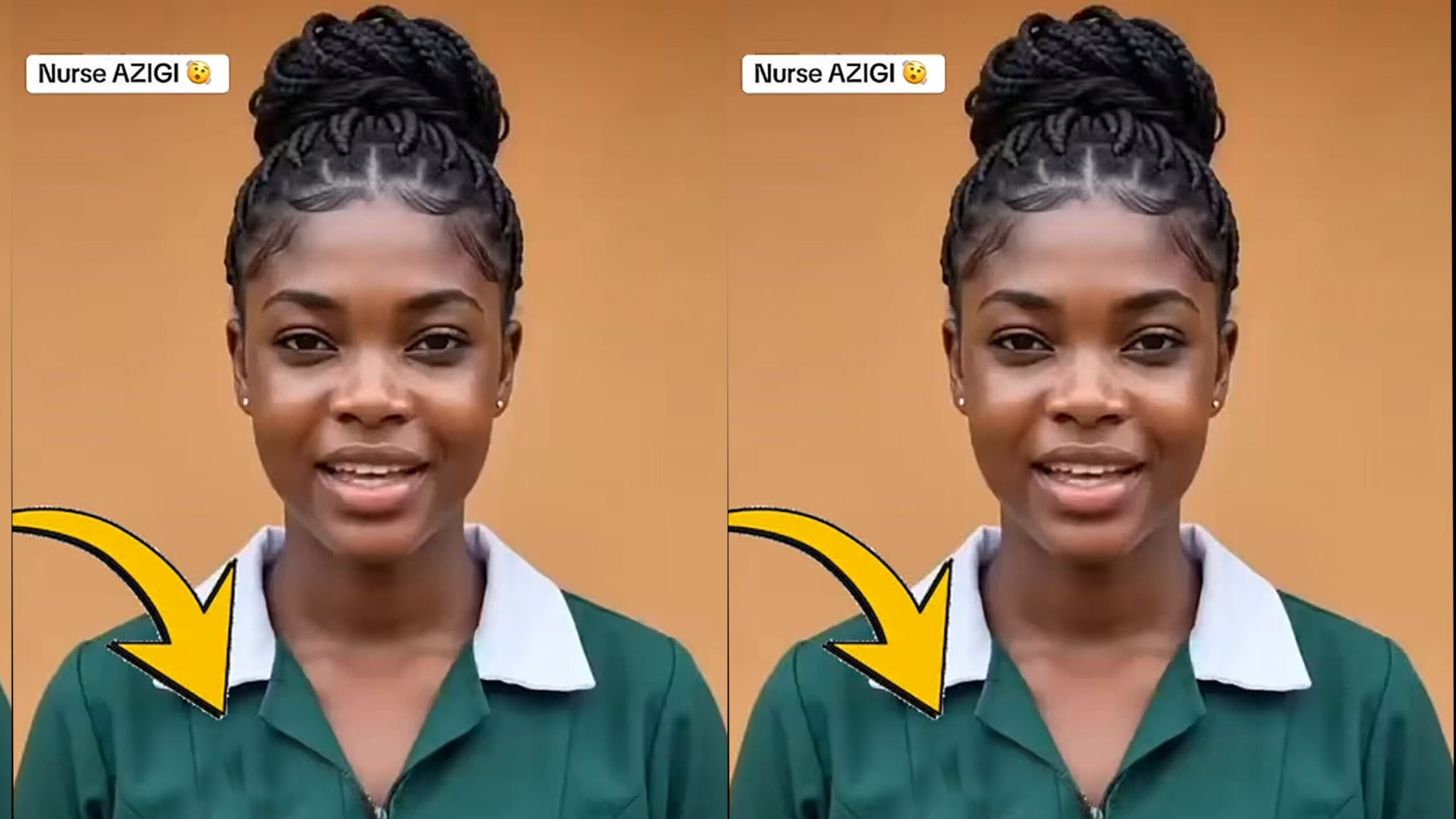
Ghana’s digital space has been rocked by the emergence of a private video allegedly involving a an unidentified nurse.
The footage, which has spread rapidly across Telegram and other social networks, has become a flashpoint for difficult conversations about privacy, consent, and the human cost of viral content.
The public response has been a study in contrasts. For every voice calling for the nurse’s dismissal, another has risen to defend her, pleading for empathy and reminding the public that the woman at the center of the storm is more than a headline she is a daughter, a sister, and a professional.
Watch Atopa Video of Nurse Here
One commentator poignantly observed: “She could be your daughter. She could be your sister. Before you share that video or demand her head, ask yourself: would you want this for someone you love?”
 Beyond the immediate controversy, the incident raises uncomfortable questions about Ghana’s digital culture.
How did private footage end up in the public domain? What responsibility do platforms and users bear when intimate content is weaponized? And what protections exist for victims of non-consensual content sharing?
These are not idle questions. For the individuals caught in such situations, the consequences can be life-altering affecting careers, mental health, and personal relationships long after the online chatter fades.
As of this publication, no official statement has been issued regarding Azigi’s employment status or any potential disciplinary proceedings.
Hellovybes urges the public to await verified information from legitimate authorities and to exercise restraint in the meantime.
We do not publish or link to private or intimate footage and remind our readers that empathy and responsibility must guide our online interactions.
Watch Atopa Video of Nurse Here