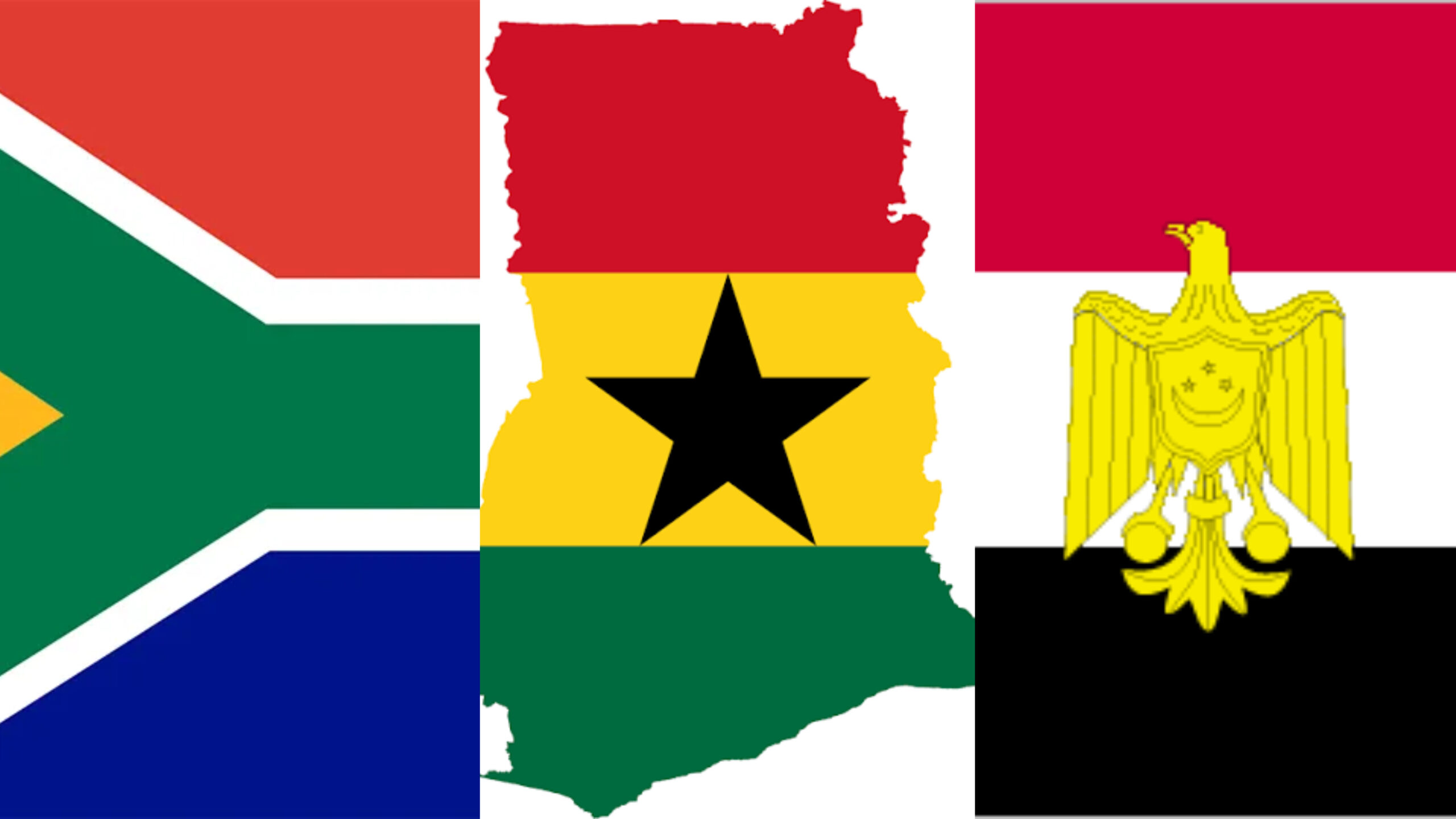
Africa is home to 54 diverse nations, each contributing to the continent’s economic growth, political development and cultural identity. However, a handful of countries continue to stand out for their influence on regional and global affairs.
According to the latest U.S. News & World Report Power Subranking, factors such as economic performance, military capability, diplomatic influence, strategic importance and global partnerships determine which nations rank among Africa’s most powerful.
From controlling major international trade routes to leading continental diplomacy and driving economic innovation, these countries play a significant role in shaping Africa’s future.
Here’s a closer look at the top five most powerful countries in Africa in 2026 and the factors behind their growing influence.
1. South Africa – Africa’s Leading Power
South Africa retains its position as the continent’s most influential nation thanks to its diversified economy, advanced infrastructure, military capabilities and strong international presence.
As one of Africa’s largest economies, the country remains a major force in finance, mining, manufacturing, technology and industrial production.
Johannesburg continues to serve as one of Africa’s biggest financial centres, while South Africa’s transport and telecommunications networks remain among the most developed on the continent.
Its diplomatic influence is equally significant. South Africa is the only African member of the G20 and remains an influential participant in BRICS, giving it a prominent voice in global economic and political discussions.
Why South Africa Ranks First
- One of Africa’s largest and most diversified economies.
- Advanced military technology and defence capabilities.
- Strong diplomatic influence through the African Union, G20 and BRICS.
- Highly developed financial, transport and telecommunications sectors.
- Global leadership in scientific research, including major astronomy projects such as the Square Kilometre Array (SKA).
Key takeaway: South Africa combines economic strength, military readiness, diplomatic leadership and innovation, making it the continent’s most influential country.
2. Egypt – Strategic Gateway Between Africa and the Middle East
Egypt remains one of Africa’s most powerful nations because of its strategic geographical location, large population, strong military and growing economy.
The country controls the Suez Canal, one of the world’s busiest maritime trade routes, through which a significant share of global shipping passes each year. This gives Egypt enormous geopolitical importance in international commerce.
Egypt also plays a vital diplomatic role across Africa and the Middle East while maintaining one of the strongest armed forces in the region.
What Makes Egypt Powerful
- Strategic control of the Suez Canal.
- One of Africa’s largest economies.
- Large population supporting economic expansion.
- Powerful and modern military.
- Long-standing diplomatic influence across the Arab world and Africa.
Key takeaway: Egypt’s control of a globally important shipping route, combined with military power and diplomatic influence, secures its place among Africa’s leading nations.
3. Morocco – Africa’s Diplomatic and Infrastructure Leader
Morocco has strengthened its international standing through strategic diplomacy, infrastructure development and renewable energy investments.
Situated between Europe and Africa, Morocco has become a major gateway for trade and investment while maintaining close relationships with the European Union, the United States and Gulf countries.
The country’s investment in renewable energy projects and high-speed rail infrastructure has further enhanced its reputation as one of Africa’s fastest-modernising economies.
Why Morocco Continues to Rise
- Strong diplomatic partnerships with Europe, the United States and the Gulf region.
- Africa’s first high-speed rail network.
- Major investments in renewable energy, including the Noor Ouarzazate Solar Complex.
- Strategic location connecting Africa and Europe.
- Expanding trade and investment across the continent.
Key takeaway: Morocco’s diplomatic influence, infrastructure investment and strategic location have transformed it into one of Africa’s fastest-rising powers.
4. Ghana – West Africa’s Democratic and Economic Success Story
Ghana has earned its place among Africa’s most influential countries through decades of democratic stability, economic resilience and growing international recognition.
Widely regarded as one of West Africa’s strongest democracies, Ghana has consistently recorded peaceful political transitions while attracting foreign investment across mining, agriculture, technology and financial services.
The country also hosts the African Continental Free Trade Area (AfCFTA) Secretariat, positioning Ghana at the centre of Africa’s long-term economic integration.
As Africa’s leading gold producer and one of the world’s largest cocoa exporters, Ghana continues to play an important role in global commodity markets.
Why Ghana Stands Out
- Stable democratic governance recognised internationally.
- Strong economic growth supported by mining, agriculture and technology.
- Africa’s leading gold producer.
- Host nation of the AfCFTA Secretariat.
- Active contributor to regional peacekeeping and diplomacy through ECOWAS and the African Union.
Key takeaway: Ghana’s political stability, expanding economy and leadership in continental trade make it one of Africa’s most respected and influential nations.
5. Algeria – Africa’s Energy and Security Giant
Algeria completes the top five ranking due to its vast natural resources, military strength and strategic influence across North Africa and the Mediterranean.
As Africa’s largest country by land area, Algeria possesses significant oil and natural gas reserves, making it one of Europe’s most important energy suppliers.
The country also maintains one of Africa’s strongest defence forces and continues to play an active role in regional diplomacy and conflict mediation.
Factors Behind Algeria’s Influence
- One of Africa’s largest economies.
- Major exporter of natural gas and crude oil.
- Powerful military with advanced defence capabilities.
- Strategic geographic position linking Africa, Europe and the Mediterranean.
- Active diplomatic engagement within the Arab League, African Union and OPEC+.
Key takeaway: Algeria’s energy resources, military capacity and regional diplomatic influence ensure it remains one of Africa’s most strategically important nations.
Africa’s Five Most Powerful Countries in 2026
Rank | Country | Major Strength | Distinct Advantage |
1 | South Africa | Economic and diplomatic leadership | G20 and BRICS membership |
2 | Egypt | Strategic trade and military strength | Control of the Suez Canal |
3 | Morocco | Diplomacy and infrastructure | Gateway between Africa and Europe |
4 | Ghana | Democratic stability and trade leadership | Host of the AfCFTA Secretariat |
5 | Algeria | Energy resources and defence | Major natural gas exporter |
How Is National Power Measured?
The U.S. News & World Report Power Subranking evaluates countries using several broad indicators rather than military strength alone. These include:
- Economic Performance: GDP, trade, industrial output and investment potential.
- Military Capability: Defence spending, equipment, operational readiness and regional security contributions.
- Diplomatic Influence: International partnerships, peacekeeping efforts and leadership in global organisations.
- Global Reach: Strategic importance, cultural influence, geopolitical relevance and participation in international institutions.
Power in Africa extends far beyond economic size alone. It reflects a country’s ability to influence regional stability, shape international diplomacy, attract investment and drive long-term development.
In 2026, South Africa, Egypt, Morocco, Ghana and Algeria continue to stand out as the continent’s most influential nations. Each brings unique strengths—from South Africa’s industrial and diplomatic leadership to Egypt’s strategic location, Morocco’s infrastructure ambitions, Ghana’s democratic credentials and Algeria’s energy dominance.
As Africa’s economies become increasingly interconnected through initiatives such as the African Continental Free Trade Area, the influence of these nations is expected to grow further, strengthening the continent’s role in global politics, trade and economic development.
Frequently Asked Questions
1. Which is the most powerful country in Africa in 2026?
South Africa ranks as the most powerful country in Africa in 2026, according to the U.S. News & World Report Power Subranking. South Africa’s diversified economy valued at over $420 billion, its membership in the G20 and BRICS, advanced infrastructure and global research leadership—including the Square Kilometre Array (SKA) radio telescope project—contribute to its top position.
2. What are the top 5 most powerful countries in Africa?
The five most powerful countries in Africa in 2026 are:
| Rank | Country |
|---|---|
| 1 | South Africa |
| 2 | Egypt |
| 3 | Morocco |
| 4 | Ghana |
| 5 | Algeria |
3. How is national power measured in Africa?
The U.S. News & World Report Power Subranking evaluates countries using 26 weighted metricsacross four broad categories:
Economic Performance: GDP growth, trade volumes, industrial output and foreign direct investment
Military Capability: Defence spending, equipment modernisation and regional security contributions
Diplomatic Influence: International partnerships, peacekeeping and leadership in global organisations
Strategic Importance: Geopolitical relevance, control of trade routes and participation in international institutions
4. Why is South Africa considered Africa’s most powerful country?
South Africa ranks first because of:
Economic strength: Africa’s most industrialised economy valued at over $420 billion
Diplomatic leadership: The only African member of the G20 and active BRICS participant
Advanced infrastructure: World-class financial, transport and telecommunications networks
Scientific innovation: Home to the Square Kilometre Array (SKA) radio telescope
Military capability: Advanced defence technology and regional peacekeeping contributions
5. Which African countries have the strongest economies?
The five largest African economies by GDP (estimated) are:
| Country | Estimated GDP |
|---|---|
| Nigeria | $500+ billion |
| South Africa | $420+ billion |
| Egypt | $400+ billion |
| Algeria | $250+ billion |
| Morocco | $160+ billion |
6. What makes Egypt one of Africa’s most powerful countries?
Egypt’s power stems from:
Strategic location: Control of the Suez Canal, through which approximately 12% of global shipping passes annually
Economic size: One of Africa’s largest economies valued at over $400 billion
Population: Over 110 million people, driving domestic demand
Military strength: One of Africa’s most capable armed forces, with defence spending exceeding $6 billion annually
Diplomatic influence: Leadership across the Arab world and Africa
7. Why is Ghana among Africa’s most powerful nations?
Ghana ranks among Africa’s most powerful nations because of:
Democratic stability: Decades of peaceful political transitions and strong governance
Economic growth: Supported by mining (Africa’s leading gold producer), agriculture (one of the world’s largest cocoa exporters) and technology
AfCFTA leadership: Host of the African Continental Free Trade Area Secretariat
Regional influence: Active contributor to ECOWAS and African Union peacekeeping missions
8. How did Morocco become one of Africa’s fastest-rising powers?
Morocco’s rise is driven by:
Infrastructure investment: Africa’s first high-speed rail network (Al Boraq)
Renewable energy: Noor Ouarzazate Solar Complex, one of the world’s largest concentrated solar power facilities
Strategic location: Gateway between Africa and Europe
Diplomatic partnerships: Close relationships with the European Union, United States and Gulf countries
Expanding African influence: Active engagement in the AU and AfCFTA
9. Why is Algeria strategically important to Africa and the world?
Algeria’s strategic importance comes from:
Energy resources: Major exporter of natural gas and crude oil, supplying approximately 50 billion cubic metres of natural gas annually to Europe
Military strength: Africa’s largest defence force with over 500,000 active troops and defence spending exceeding $10 billion annually
Geographic position: Africa’s largest country by land area, linking Africa, Europe and the Mediterranean
Diplomatic role: Active engagement in the Arab League, African Union and OPEC+
10. What is the African Continental Free Trade Area (AfCFTA)?
The African Continental Free Trade Area (AfCFTA)is a landmark trade agreement creating a single continental market of 1.4 billion people with a combined GDP exceeding $3.4 trillion. Ghana hosts the AfCFTA Secretariat, positioning itself at the centre of Africa’s economic integration.
11. How does the AfCFTA affect Africa’s most powerful countries?
The AfCFTA is projected to:
Boost intra-African trade by 52% by 2035
Lift 70 million people out of extreme poverty
Generate $450 billion in annual welfare gains
Reduce trade transaction costs by 50%
South Africa, Egypt, Morocco, Ghana and Algeria are uniquely positioned to lead this transformation due to their economic strength, infrastructure and diplomatic influence.
12. Which African country is the biggest gold producer?
Ghana is Africa’s leading gold producer, contributing approximately 20% of global cocoa supply and playing a significant role in global commodity markets.
13. What is South Africa’s role in global organisations?
South Africa is the only African member of the G20 and maintains active membership in BRICS, giving it a prominent voice in global economic and political discussions. It also contributes significantly to African Union peacekeeping missions.
14. Which African countries are in BRICS?
South Africa is a member of BRICS (Brazil, Russia, India, China, South Africa). Egypt and other African nations have expressed interest in joining the expanded BRICS+ grouping.
15. What is the Suez Canal and why does it matter to Egypt?
The Suez Canal is one of the world’s busiest maritime trade routes, connecting the Mediterranean Sea to the Red Sea. Approximately 12% of global shipping passes through the canal annually, generating over $9 billion in revenue for the Egyptian economy and giving Egypt significant geopolitical influence.
16. What is the U.S. News & World Report Power Subranking?
The U.S. News & World Report Power Subrankingevaluates countries based on their economic performance, military capability, diplomatic influence and strategic importance. It uses 26 weighted metrics to determine which nations have the greatest global influence.
17. Is military strength the only measure of national power?
No. While military capability is an important factor, national power is measured through a combination of:
Economic performance: GDP, trade and investment
Military capability: Defence spending and readiness
Diplomatic influence: International partnerships and leadership
Strategic importance: Geopolitical relevance and trade route control
18. Why isn’t Nigeria in the top 5 most powerful countries in Africa?
While Nigeria has Africa’s largest economy valued at over $500 billion, the U.S. News & World Report Power Subranking considers factors beyond economic size, including diplomatic influence, infrastructure development, governance stability and strategic importance. South Africa, Egypt, Morocco, Ghana and Algeria outperform Nigeria in these combined metrics.
19. Could the rankings change in the future?
Yes. The AfCFTA, demographic trends, economic growth, infrastructure investment and diplomatic developments are expected to reshape Africa’s power dynamics in the coming decades. Countries like Kenya, Rwanda and Ethiopia are emerging as regional influences and could move up in future rankings.
20. What other African countries are rising in influence?
Several African nations are gaining influence, including:
Kenya: East Africa’s economic and diplomatic hub
Nigeria: Africa’s largest economy and population
Rwanda: Innovation and governance reform leader
Ethiopia: Rapid economic growth and infrastructure development
Tanzania: Emerging East African economic power
Angola: Major oil exporter and growing economy
21 Which African country has the strongest military?
Algeria maintains Africa’s largest defence force with over 500,000 active troops and annual military spending exceeding $10 billion. Egypt and South Africa also possess highly capable militaries.
22. Which African country is most democratic?
Ghana is widely regarded as one of Africa’s strongest democracies, with consistent peaceful political transitions, high press freedom rankings and strong governance indicators.
23. Which African countries are G20 members?
South Africa is the only African member of the G20, giving it a prominent voice in global economic and political discussions.


